Announcement Bar Text Goes Here

OPTIONAL BUTTON

ACADEMICS

Graphic

HIGH LEVELS OF LEARNING FOR EVERY STUDENT

Our instructional team provides resources and services to district teachers that support high-quality instruction in every school. Our methods are predicated on both the science of teaching, through effective, research-based instructional practices, and the art of teaching, through student-centered, innovative, and promising practices. Educator teams throughout our district engage in collaborative and job-embedded professional learning that empowers them to create learning experiences and environments that engage, motivate, and prepare students for life, meaningful work, and civic responsibilities.

ADVANCED PLACEMENT

Advanced Placement (AP) classes allow students to experience a college-level course while still in high school. Forest Hills offers a variety of AP classes in all three high schools. In keeping with our vision of “all learners achieving individual potential,” our Guiding Principles, and the College Board’s Equity and Access Policy Statement, we provide all students the opportunity to participate in AP classes.

We encourage students to take the AP exam in their subject but do not require them to do so. Historically, most do, and the overwhelming majority score above state, national, and global averages. While each college and university determines its own criteria, many of our students are able to obtain credit, advanced placement, or both with scores of three or higher.

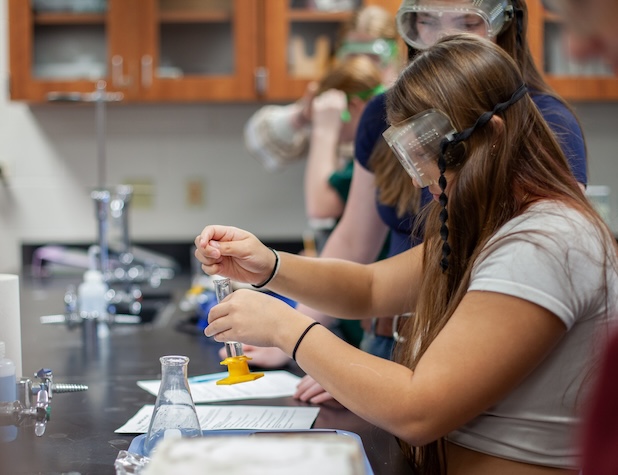
2 students doing a science experiment in a lab
42
AP Classes Available In-Person Or Online
3344
AP Exams Were Given This School Year
98
%
Score A 3 Or Higher On Their AP Exams

GIFTED EDUCATION MODEL & ACCELERATED MATH

GIFTED EDUCATION MODEL FOR K-6

MIDDLE SCHOOL ACCELERATED MATH

GIFTED EDUCATION MODEL FOR K-6

We seek to identify students who could benefit from being placed in our gifted cluster model. Our gifted model includes:

  • Placement in a gifted cluster, mixed ability classroom, where identified gifted students are “clustered” together with a teacher who has specialized training in understanding, planning for, and instructing gifted students.
  • Engagement in appropriately challenging curriculum and instruction that may include enrichment, extended learning opportunities, or acceleration/compacting.

ADDITIONAL FAQ

MIDDLE SCHOOL ACCELERATED MATH

Each of our Forest Hills middle schools offers two seventh-grade math courses. Math 7 follows the traditional seventh-grade curriculum, building core math skills at a steady, grade-level pace. Math 7/8 is an accelerated course that covers both 7th- and 8th-grade math content in a single year, laying the foundation for students to take Algebra 1, a high school-level course, in 8th grade.

ADDITIONAL FAQ

K-12 LANGUAGE IMMERSION

Fluency starts early. FHPS offers two full K-12 immersion pathways:

  • Spanish Immersion: students learn core subjects in Spanish from kindergarten on, building toward true bilingual fluency.
  • Mandarin Chinese Immersion: one of the only programs of its kind in the region, opening doors to language, culture, and global opportunity.

Both programs carry through middle and high school, so the investment families make in elementary immersion keeps paying off for twelve years.

male student writing whiteboard in Mandarin

ASSESSMENTS

NWEA MAP GROWTH
M-STEP
MI-ACCESS
PSAT 8/9 & PSAT 10
PSAT/NMSQT
MME-SAT
STAMP
WIDA ACCESS & WIDA SCREENER

MAP Growth is a computer-adaptive assessment in reading, math, and English language conventions that adjusts question difficulty based on each student’s responses. It measures individual academic growth over time and helps teachers identify students who may need additional support. Students in kindergarten through 8th grade take it three times per year — fall, winter, and spring.

The Michigan Student Test of Educational Progress (M-STEP) is a state-required, computer-based assessment that measures student performance against Michigan’s academic standards in English language arts, mathematics, science, and social studies. Results help schools and families understand how students are performing relative to grade-level expectations. Students in grades 3–7 take ELA and math annually, while science and social studies are tested in grades 5, 8, and 11.

MI-Access is Michigan’s alternate assessment for students with the most significant cognitive disabilities whose IEP team has determined that standard assessments are not appropriate. It measures performance in ELA, math, science, and social studies at three levels of accessibility. Students in grades 3–8 and 11th grade take MI-Access each spring.

These College Board assessments measure college readiness in evidence-based reading/writing and mathematics, and are required by the Michigan Department of Education. Results help students and families begin planning for college and track progress toward SAT readiness. The PSAT 8/9 is given to students in 8th and 9th grade; the PSAT 10 is given to 10th graders each spring.

The PSAT/NMSQT is a timed, College Board college-readiness assessment in reading/writing and mathematics that also serves as the qualifying exam for National Merit scholarships. It helps juniors prepare for the SAT and identify scholarship opportunities. FHPS offers it annually to 11th grade students each October.

The Michigan Merit Exam (MME) is a collection of four assessments required of all public school juniors: the SAT with Essay, M-STEP Science, M-STEP Social Studies, and ACT WorkKeys. Together they measure college and career readiness and fulfill state and federal accountability requirements. The MME is administered each spring to 11th graders, with an opportunity for 12th graders who missed it.

The STAMP (STAndards-based Measurement of Proficiency) assessment measures language proficiency in reading, writing, listening, and speaking in Spanish or Mandarin. It is used to monitor individual student growth and overall program effectiveness in FHPS’s immersion programs. Immersion students take STAMP in every even grade from 2nd through 10th grade, with an optional administration for juniors and seniors seeking the Michigan Seal of Biliteracy.

WIDA assessments measure English language proficiency in reading, writing, listening, and speaking for students identified as English learners (ELs). WIDA ACCESS is given annually to monitor EL progress and determine the level of English support needed, while the WIDA Screener is administered to newly enrolled students to determine initial eligibility for EL services. WIDA ACCESS is given each February and March to eligible K–12 students

MULTILINGUAL LEARNERS

In Forest Hills Public Schools, more than 60 languages other than English are spoken in the homes of our families. This rich linguistic diversity is one of our community’s greatest strengths, and it’s exactly why FHPS is committed to offering a comprehensive Multilingual Learners (MLL) program. Every student deserves the opportunity to access grade-level content, build strong English language skills, and see their home language and culture valued as an asset rather than a barrier. Through individualized identification, consistent progress monitoring, and close partnership with families, our MLL program ensures that language is never a limit on what a Forest Hills student can achieve.

A group of young students learning together at a desk

STUDENT SUCCESS

Belonging is foundational to student engagement, attendance, achievement, and wellness. Students who feel connected are more likely to participate, collaborate, and thrive both academically and socially. FHPS intentionally builds systems and shared experiences that foster connection across all grade levels, using a common language of belonging across schools, events, and monthly engagement activities.

In FHPS, belonging is experienced as students are welcomed, invited, present, accepted, known, supported, befriended, heard, needed, involved, and loved.

FHPS partners with collaborative groups through the Student Success office to strengthen this work: the Shared Voices Committee, a high school student group, along with dedicated teacher and parent groups. Together, these groups bring diverse perspectives and lived experiences that help shape and strengthen a sense of belonging across the district. Their shared work supports ongoing efforts to ensure every student feels connected, heard, and included within FHPS learning environments.

Four elementary students posing for a picture at a field

POSITIVE BEHAVIORAL INTERVENTIONS AND SUPPORTS (PBIS)

We believe a positive school climate is the foundation for learning. Positive Behavioral Interventions and Supports (PBIS) is a research-based, district-wide framework that helps create safe, consistent, and welcoming environments in every school, from kindergarten through 12th grade. Rather than focusing solely on correcting behavior, PBIS proactively teaches students the skills they need to succeed, in the classroom, in the hallway, and beyond. By setting clear expectations, recognizing positive choices, and providing targeted support when needed, PBIS helps every student feel seen, valued, and ready to learn. In Forest Hills, our PBIS work centers around PRIDE: a shared commitment to being Persistent, Respectful, Inclusive, and Dependable, Every Day.

high school students ready to teach younger kids

SUPPLEMENTAL ACADEMIC SUPPORT: TITLE I SERVICES

Title I funding provides additional academic support for students at Meadow Brook Elementary, Orchard View Elementary, and Collins Elementary. The program is designed to identify students who could benefit from extra learning opportunities and targeted instruction to help them master core curriculum content.

HOW DOES THE PROGRAM WORK?

HOW IS MY CHILD'S ACADEMIC PROGRESS MEASURED?

HOW CAN I GET INVOLVED WITH MY CHILD'S SCHOOL?

WHAT ARE SUPPLEMENTAL ACADEMIC SUPPORT SERVICES?

WHAT DOES SUPPLEMENTAL ACADEMIC SUPPORT MEAN FOR MY CHILD?

HOW AM I INFORMED IF MY CHILD NEEDS SUPPLEMENTAL SUPPORT?

HOW AM I KEPT INFORMED OF MY CHILD'S ACADEMIC PROGRESS?

WHAT CURRICULAR RESOURCES ARE USED FOR SUPPLEMENTAL ACADEMIC SERVICES?

WHAT DOES IT MEAN IF MY CHILD'S SCHOOL IS A TITLE I TARGETED ASSISTANCE SCHOOL?

QUESTIONS ABOUT ELIGIBILITY OR SERVICES?

HOW DOES THE PROGRAM WORK?

Eligible students receive direct, small-group instruction from a highly qualified teacher. Parent or guardian consent is required for a student to participate. Title I support is intended as a short-term intervention, though students may continue in the program longer if their continued participation is determined to be beneficial. To track progress, students complete a pre-assessment when they begin the program, a post-assessment when they exit, and additional check-in assessments as needed along the way.

HOW IS MY CHILD’S ACADEMIC PROGRESS MEASURED?

Growth goals are set for each student participating in the school’s supplemental support services. These goals are set with a focus on closing achievement gaps between the student and the level of skill and knowledge expected for her/his grade level.

The time it takes to achieve different goals will depend upon the student’s starting skill level and the time and intensity of the intervention support
determined by your child’s teacher. The progress of students receiving supplemental support is monitored every 4-6 weeks through classroom and other assessments embedded within curricular resources.

The progress of all students is measured three times per year through the NWEA MAP reading and mathematics assessments.

HOW CAN I GET INVOLVED WITH MY CHILD’S SCHOOL?

Our greatest asset is our families. Each Forest Hills Title I school has a family engagement plan that includes methods through which the school provides outreach to parents and guardians to help them understand curriculum, content standards, and assessments. The plan also includes ways in which families can partner with the school to support their children’s learning at home. In addition, all parents and guardians are invited to:

  • Attend open house and curriculum nights
  • Attend school events
  • Communicate with your child’s teachers regularly
  • Volunteer
  • Provide feedback through school surveys

WHAT ARE SUPPLEMENTAL ACADEMIC SUPPORT SERVICES?

Each staff member at your child’s school is committed to ensuring that every student gets what she/he needs to grow and thrive academically. When teachers identify a student with an academi need in order to stay on track with expected growth, they work together to coordinate additional support for that student. Supplemental academic supports are interventions that target skills to address these learning gaps.


WHAT DOES SUPPLEMENTAL ACADEMIC SUPPORT MEAN FOR MY CHILD?

Supplemental academic support is delivered through many formats including small-group or 1:1 instruction with a teacher or a highly qualified paraprofessional. Supplemental support never occurs during general classroom instruction time or during special classes such as music, art, or physical education.

Students with Individualized Education Plans (IEPs) that address specific learning disabilities in a subject area are served under the district’s special education program and not through the school’s supplemental academic support program.

HOW AM I INFORMED IF MY CHILD NEEDS SUPPLEMENTAL SUPPORT?

FHPS teachers continuously analyze data from NWEA MAP and classroom assessments to quickly catch and address learning gaps throughout the year. Each principal provides families with information on their school’s specific support model, staffing, and student qualification criteria at the beginning of the school year.

HOW AM I KEPT INFORMED OF MY CHILD’S ACADEMIC PROGRESS?

During the school year, all families receive periodic updates about their child’s academic progress through semester report cards, progress reports, and/or family conferences. Families of students participating in the school’s supplemental support services receive additional periodic updates from their child’s teacher.

WHAT CURRICULAR RESOURCES ARE USED FOR SUPPLEMENTAL ACADEMIC SERVICES?

Our general education curricular resources provide lessons teachers can use to target and supplement learning for specific skills. The Reading & Writing Project is the curricular resource used to teach English language arts in grades K-6th. Additional research-based resources include UFLI Foundations and Fountas & Pinnell’s Leveled Literacy Intervention. In mathematics, supplemental lessons within the Everyday Math curricular resource ar used in K-5th grades while the Connected Mathematics Project is used in 6th grade.

WHAT DOES IT MEAN IF MY CHILD’S SCHOOL IS A TITLE I TARGETED ASSISTANCE SCHOOL?

Since the 1960s, The Federal Title I Grant program has provided additional funding to schools to assist them with supplemental academic support for students. Schools set guidelines to identify eligible students based on their individual needs. Districts decide which schools receive Title I funds.* These schools receive additional federal funding to address achievement gaps among students. Schools qualify for Title I funding if the percentage of students participating in free or reduced lunch programs exceeds the district average in the selected grade levels.

In FHPS, Title I funds are primarily used to employ additional paraprofessional staff in qualifying Targeted Assistance Schools. Along with other instructional paraprofessionals, these staff members work under the direct supervision of teachers to provide supplemental academic support during the school year. Title I funds are also used to purchase instructional materials or technology for use by eligible students in Targeted Assistance schools as well as to support students throughout the district who are experiencing homelessness.

The goals of each FH school’s supplemental academic support services, including Title I funded paraprofessionals, are part of the school and district improvement plans to close achievement gaps among students.

*In the 2025-26 school year Collins, Meadow Brook, and Orchard View elementary schools are identified for Title I Targeted Assistance.

QUESTIONS ABOUT ELIGIBILITY OR SERVICES?

We’re happy to talk with you about whether Title I services might be a good fit for your child, or to answer any other questions about the program. Please contact the Instruction Office to learn more.

MCKINNEY-VENTO HOMELESS SERVICES

MISSION
THE MCKINNEY-VENTO HOMELESS ASSISTANCE ACT
DEFINITION OF HOMELESS
KNOW YOUR RIGHTS
COMMUNITY RESOURCES
Mother hugging her student

MISSION

The mission of the FHPS Homeless Liaison is to assist FHPS students experiencing homelessness through direct support and advocacy. The primary objective is to remove educational barriers to help ensure students engage successfully in school and school-related activities and eliminate any barriers that will hinder social, emotional, and academic growth.

THE MCKINNEY-VENTO HOMELESS ASSISTANCE ACT

The following is the policy of the Congress:

  1. Each State educational agency shall ensure that each child of a homeless individual and each homeless youth has equal access to the same free, appropriate public education, including a public preschool education, as provided to other children and youths.
  2. In any State where compulsory residency requirements or other requirements, in laws, regulations, practices, or policies, may act as a barrier to the identification of, or the enrollment, attendance, or success in school of, homeless children and youths, the State educational agency and local educational agencies in the State will review and undertake steps to revise such laws, regulations, practices, or policies to ensure that homeless children and youths are afforded the same free, appropriate public education as provided to other children and youths.
  3. Homelessness is not sufficient reason to separate students from the mainstream school environment.
  4. Homeless children and youths should have access to the education and other services that such children and youths need to ensure that such children and youths have an opportunity to meet the same challenging State academic standards to which all students are held.

DEFINITION OF HOMELESS

Definition of Homeless (McKinney-Vento) Children who lack a fixed, regular, and adequate night-time residence.

Students and families may qualify if they are living in the following situations:

  • Shelter or Transitional Housing Program
  • Motel/Hotel
  • Doubled up with a friend or relative due to loss of housing and economic hardship.
  • Unsheltered – parks, public spaces, abandoned buildings.
  • Unaccompanied youth not in the physical custody or presence of a parent or legal guardian and living in one of the above situations.

KNOW YOUR RIGHTS

  • Students experiencing homelessness should be immediately enrolled even if they lack the required documents (birth certificate, proof of residence, immunization records, etc.).
  • Students may either continue in their school of origin (includes feeder pattern schools) or enroll in the district where they are living.
  • Transportation to school of origin is required if the student would face a barrier to attendance without it.
  • Provide uniforms/school clothes, school supplies, and hygiene items to students who need them.
  • Children and youth experiencing homelessness can remain in their school of origin for the duration of homelessness and until the end of an academic year in which they obtain permanent housing, if it is in their best interest.
  • McKinney-Vento advocates must make best interest determinations that presume that staying in the school of origin is in the best interest of the child or youth; consider specific student-centered factors; prioritize the wishes of the parent, guardian, or unaccompanied youth; and include a written explanation and right to appeal if the LEA determines that school stability is not in the best interest of the child or youth.

SURVEY DATA

At Forest Hills Public Schools, student voice is a vital part of how we understand and improve the experiences we provide. Throughout the year, our students are invited to participate in surveys covering a range of topics, from programming and school climate to day-to-day experiences in the classroom, giving us direct insight into what’s working well and where we can grow. In keeping with Section 164k of the Michigan State School Aid Act (MCL 388.1764k), FHPS publicly posts the student’s questions and aggregate results from these surveys, ensuring transparency for our families and community.

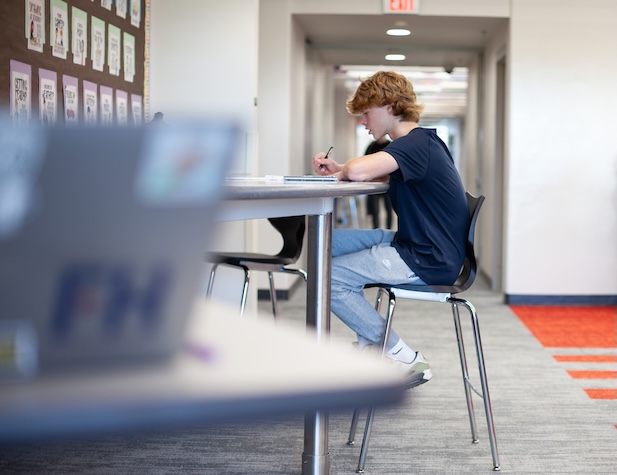
male student working at a table in a hall

INSTRUCTION LEADERSHIP TEAM

SCOTT HAID

Assistant Superintendent for Instruction

MEET SCOTT

KIM VAN ANTWERP

Director of Elementary Instructional Services

MEET KIM

JENNIFER MACKIE

Director of Secondary Instructional Services

TAMASHA JAMES

Director of Student Success

MEET TAMASHA

DAWN HEEREMA

Director of Chinese Immersion

MEET DAWN

ALLISON WOODSIDE DE CARRILLO

Director of Spanish Immersion

MEET ALLISON
Close Video Popup